High-pressure Steel Pipelines Rehabilitation after Long-time of Operation 


What does It Mean—The Rehabilitation?

The pipeline rehabilitation is a complex of works with the aim to restore or even upgrade its original technical properties to reach newly stated requirements.

From this definition it is clear, that the scope of rehabilitation is very flexible—it depends on requirements characteristics and real pipeline status. So rehabilitation can vary from simply total pipeline recoating to pipeline hydrotesting with minimal coating repairs.


The AIM of Pipeline Rehabilitation 

Theoretical Principle Of Complex Rehabilitation  

Pipeline Rehabilitation Procedure

The Aim of Pipeline Rehabilitation Na začátek této stránky

There are a number of reasons for pipeline rehabilitation after a long time of operation, with usually only one predominating in each individual case. 

The most common reasons are:

  • A considerable increase in repair costs after a long time of operation;

  • Suspicion of material ageing and degradation of its properties;

  • The need to expand transport capacity;

  • The need to increase the maximum allowable operating pressure (MAOP);

  • Occurrence of serious defects in welds, 
    both from manufacture and installation;

  • Increased incidence of operating problems;

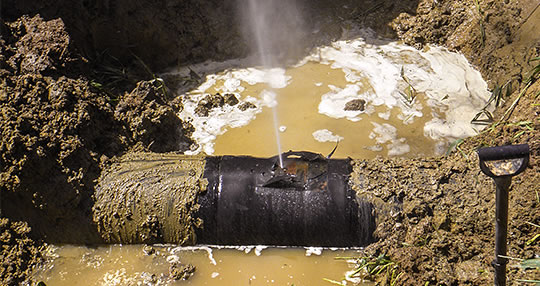
  • Serious damage to the pipeline caused by undesirable 
    operating factors (such as SCC);

  • National or local authorities require pipeline safety demonstration.

 
Pipelines International — March 2011 (cover)

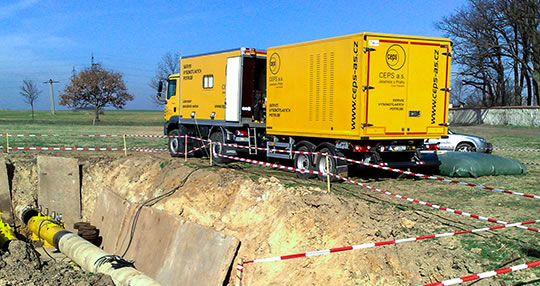
CEPS Replacing 32 pipes on the Druzhba oil pipeline in under 88 hours

In September 2007, a unique event in terms of its scope and speed was carried out on the Czech section of the 20 inch diameter Russia to Germany Druzhba Oil Pipeline in South Moravia, where 32 pipe sections were replaced in under 88 hours.

Pipelines InternationalRead more in Pipelines International — March 2011

Theoretical principle of complex rehabilitation  Na začátek této stránky
including pressure reparation of wall defects 

Over 20 years running research programme monitored pipe wall defects’ behaviour during simulations of pipe long-term operation characterised by cyclic changes of the operating pressure, and their response to mechanical overload on pipe wall. The purpose of this research was to find out whether and to what degree can the technical conditions of a pipeline be stabilised after years of operation for a long time into the future, 
or even improved, via mechanical overloading by internal pressure of water, 
so called pressure reparation.


Stress Overload Method is based on the theory of cylindrical shells 
and redistribution of the tensions in their walls during overloading 
to the limit of elasticity. Several favourable effects can be observed 
in this process:

  • redistribution of additional tensions from pipe manufacture 
    and laying—these additional tensions level (particularly in old pipes) 
    to as much as 15 to 20 per cent of the yield point, thereby 
    reducing significantly the pipe’s local operating safety;

  • temporary containment of the growth of sub-critical cracks which would otherwise gradually grow through the pipe wall due to the fatigue mechanism. Favourable prestress is created on the tip of cracks liable to growth thanks to the rapid drop of internal pressure during pressure reparation (the time it would take for this effect to fade out depends on the character of pipeline operation, namely the frequency and amplitude of changes in operating pressure—for example, it is commonly more than 20 years in pipelines under normal operation);

  • changing the geometry of spots damaged by corrosion supports 
    a more favourable way of their stressing by cyclic loads 
    caused by pressure changes;

  • the growth of sub-critical cracks, caused by stress corrosion, 
    is arrested; such cracks are otherwise totally undetectable;

  • above-critical cracks are opened safely and such spots are then relatively easily found and repaired using standard methods.


All-round Rehabilitation of a Steel Pipeline involves a series of consecutive operations intended to carry out such a package of inspections and repairs and such changes in pipe material as to achieve a degree of safety in respect of the future operating conditions at least comparable with the degree of safety the pipeline had at the time of commissioning. 
Such changes, and also the real-life testing of the actual level of pipeline safety (given as the ratio of the tension in pipe wall upon reaching the integral yield point and the tension at the maximum operating pressure) take place at the stage of pressure reparation. This involves loading the pipeline in a regime of experimentally verified hydraulic pressure, which will cause the steel’s yield pint to be exceeded in the defects expected.


Although pipeline pressure reparation is the chief, 
and technically the most demanding stage of pipeline reparation, 
it is merely one of the components of this complex pipeline treatment. 
Another important element of pipeline rehabilitation is corrosion 
prospecting along the pipeline’s route, based on which 
decisions are made as to which sections of the pipeline to uncover 
to repair damaged coating. These repairs, as well as possible 
adjustments of the cathodic protection regime, 
precondition subsequent safe operation of the pipeline 
with the maximum use of the favourable effect 
of pressure reparation.

Conditions and operating limits for pressure reparation are defined on the basis of tests made on steel material samples and a pipe body, both made of a sample pipe cut out from the pipeline at the place which thanks to corrosion prospecting can be regarded as the most damaged spot.


The Key Material Characteristics of a Pipe are represented by results of tensile tests to determine the yield point Re (SMYS), ultimate strength Rm and extensibility A5. Very important are tests of fracture characteristics, notch toughness and fracture toughness. Their values are decisive for designing the future operating parameters of the pipeline after rehabilitation. Extensibility A5 and the value of Re/Rm express the store of plasticity in pipe material. Additional criteria for assessing pipe base materials include chemical composition, microstructure and micro-purity. Results of fracture toughness tests and the size of the J-integral help to calculate the critical length of the crack in pipe wall for the specific material in question.


Reparation Pressure, determined based on the above material tests, 
is then verified or adjusted in light of the behaviour displayed by the pipe body made of the sample taken from the pipeline during the preparatory stage. On this pipe sample of a “real size”, i.e. having a length of at least 10 D to prevent the bracing effect of pressure caps from influencing the sample’s behaviour, pressure reparation is performed, whereupon long-term operation is simulated by frequent pressure cycles over the entire range of the future operating pressure. Simulation by cyclic stress represents 
at least 20 future years of operation.


Pipeline Rehabilitation Procedure Na začátek této stránky

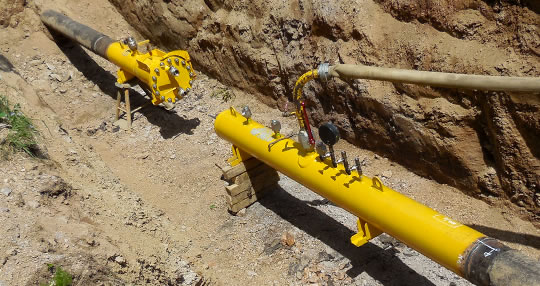
The main operations on a pipeline as part of its rehabilitation 
after long service include
:

  1. detailed corrosion prospecting of the route and detailed check 
    of the cathodic protection’s function;

  2. detailed analysis of the pipeline’s operating history and its failures (accidents) and repairs, reconstruction or relays;

  3. pipe sample removal from the line;

  4. detailed tests of mechanical and fracture properties 
    of the pipe steel, assessment of their degradation;

  5. tests of coating properties on pipe sample and its behaviour 
    in the process of pressure reparation;

  6. verification of the pressure reparation procedure 
    defined with the help of the tests under 4), 
    on a pipe body made of the sample, see 3);

  7. design of  technological procedures of pipeline rehabilitation, 
    review and approval of the procedures by local authorities;

  8. isolating of pipeline sections from the system, cleaning, 
    repair of spots with impermissible geometry, 
    cut out of old valves;

  9. in-line inspection, if needed, using a geometry 
    and intelligent pig, repair of defects identified during inspection;

  10. repair of coating defects based on results 
    of corrosion prospecting using the Pearson method 
    and results of the corrosion activity 
    of the environment;

  11. pipeline cutting to working sections, sections filled with 
    water, two cycles of pressure reparation;

  12. repair of the above-critical defects which may have opened;

  13. pressure test to the pressure defined on the basis 
    of previous tests and the pipeline’s behaviour 
    during pressure reparation (the new level of operating 
    pressure may be the same as or even higher than 
    the original pressure, in absolutely exceptional cases it may be lower);

  14. analysis of test water in the pipeline, 
    pipeline draining and water disposing in accordance 
    with results of analysis;

  15. reconnecting pipeline sections and inserting new pieces; 
    X-ray checks of welds; mounting of new section 
    closing valves if needed;

  16. pipeline drying to the dew point of water under –4 °F;

  17. pipeline re-connected to the system;

  18. air removed from pipeline, start of operation.

    The above list of operations indicates that this is an in-depth examination of the pipe relying on specific tests of the technical parameters of the steel and the pipe. Based on these tests, the conditions for further long-term 
    (20 to 30 years) safe and reliable operation are laid down.  


    The rehabilitation is a new life for old pipelines.


    BACK TO CATALOG Back to Catalog    ON TOP OF THIS PAGE